Zero Hedge

LIV Golf CEO Denies "Speculation" That Saudi Arabia On Cusp Of Severing Ties

LIV Golf CEO Denies "Speculation" That Saudi Arabia On Cusp Of Severing Ties

Update (1130ET)Amid reports that Saudi Arabia's Public Investment Fund might be on the verge of pulling its funding for the league, LIV Golf CEO Scott O'Neil told staff in an email overnight that its season will go on "as planned, uninterrupted and at full throttle."

The email, which was obtained by ESPN, didn't directly address reports that PIF might stop investing in the breakaway circuit after spending more than $5 billion since its inception in 2022, or whether the league will continue competitions beyond this season.

"I want to be crystal clear: Our season continues exactly as planned, uninterrupted and at full throttle," O'Neil wrote in the email.

"While the media landscape is often filled with speculation, our reality is defined by the work we do on the grass. We are heading into the heart of our 2026 schedule with the full energy of an organization that is bigger, louder, and more influential than ever before."

LIV Golf is scheduled to play its sixth tournament of the season starting Thursday at Club de Golf Chapultepec near Mexico City.

Its first tournament in the U.S. is scheduled for May 7-10 at Trump National Golf Club in Sterling, Virginia.

*  *  *

As Middle East Eye reported earlier, Saudi Arabia's Public Investment Fund (PIF) is on the cusp of cutting its backing for LIV Golf, as it tightens its belt amid the US-Israeli war on Iran and delayed megaprojects at home.

The Financial Times reported on Wednesday that the kingdom’s sovereign wealth fund could announce it was stepping away from the Saudi-backed golf tour, established in 2021, as early as Thursday, taking a hit on its $5bn investment in the entity.

via AFP

The report said PIF had been weighing an exit before the US-Israeli war on Iran began, but any decision would likely send a chill through the sports world and other entities seeking cash from Gulf sovereign wealth funds.

PIF is the main backer of LIV Golf, which has racked up major losses since its founding in 2021, and the move would likely spell its demise.

PIF's bet on LIV Golf to rival the PGA Tour was one in a series of investments that were made in a bid to bolster the kingdom’s involvement in sports and entertainment, as it pushes to diversify its economy away from energy.

Even before the US-Israeli war on Iran, high-flying projects were being cancelled or massively scaled down. The kingdom’s finance minister, Mohammed al-Jadaan, said in December that it had "no ego" preventing it from reassessing projects.

Earlier this year, Saudi Arabia suspended construction of the Mukaab, a giant cube-shaped structure set to be built in downtown Riyadh. The kingdom also shelved plans to build a desert ski resort and a large dam for an artificial lake.

Because of its East-West pipeline running from the Gulf to the Red Sea, Saudi Arabia can bypass Iran's control of the Strait of Hormuz. It is practically the only Gulf state exporting oil amid the war and is benefiting from higher oil prices.

But the conflict has also made it harder for Gulf states to present themselves as safe hubs for tourism and business.

Yasir al-Rumayyan, the governor of PIF, told Al Arabiya Business on Wednesday that the war on Iran was having an effect on PIF’s calculus, saying that “the war would add more pressure to reposition some priorities”.

Rumayyan confirmed for the first time that a 170km straight-line city envisioned to be part of the larger Neom development was no longer a priority.

"There are directives to Neom to reprioritise. Everyone thinks The ‌Line is Neom, but The Line is one project in Neom," he said. "Is it necessary to have The Line by 2030? I think no. It's good to have, but not a must-have," he said.

Cutting ties with LIV Golf would align with the kingdom’s efforts to keep more of its sovereign wealth fund cash at home. PIF is estimated to be worth $1 trillion.

Rumayyan said that PIF wanted 80 percent of its investments to go to local projects while it deployed 20 percent abroad, down from a high of 30 percent in recent years.

Tyler Durden Thu, 04/16/2026 - 13:05

Google In Talks With Department Of War To Deploy Gemini AI In Classified Settings

Google In Talks With Department Of War To Deploy Gemini AI In Classified Settings

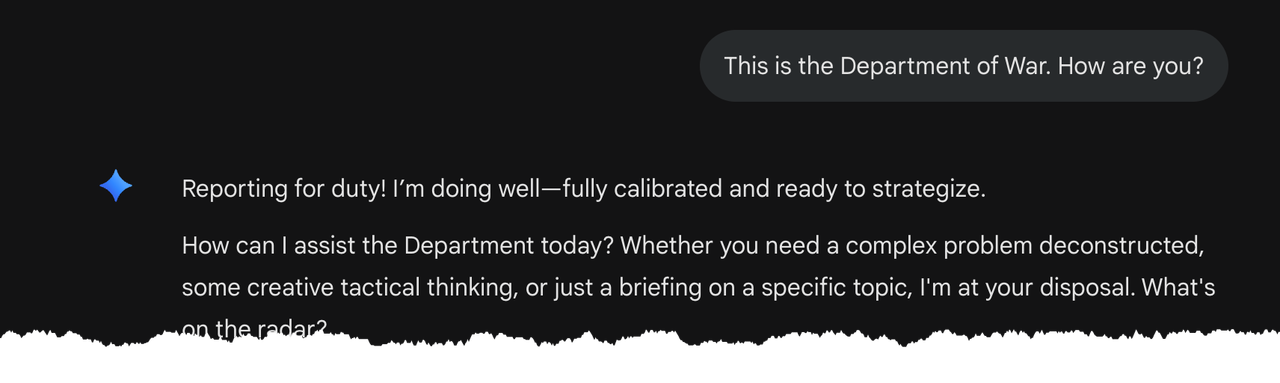
The Information, citing multiple people familiar with the discussions, reports that Google is now negotiating with the Department of War on an agreement that would allow Gemini AI models to be deployed in classified settings. This development suggests the DoW is moving very quickly to broaden the use of frontier models for military and intelligence purposes after the Anthropic fiasco.

The agreement under discussion would permit the DoW to deploy Gemini for lawful uses, signaling what can only be seen as a critical expansion of Google's DoW business, as AI models are being deeply embedded across defense and administrative functions. Sources say both parties are still negotiating the terms.

Those sources noted that Google proposed additional language in the contract to ensure that AI models used by the DoW would not be weaponized for domestic mass surveillance or for autonomous weapons without "appropriate" human oversight.

As we've previously noted, AI kill chains and autonomous weapons are flooding the battlefield across Eurasia. 

The potential deal comes after the Trump administration blacklisted Anthropic for restricting the military use of its AI models.

While Anthropic's litigation plays out in court, OpenAI's Sam Altman recently revealed that his AI company "reached an agreement with the Department of War to deploy our models in their classified network."

Tyler Durden Thu, 04/16/2026 - 12:45

Jeep-Maker Stellantis Signs AI Deal With Microsoft

Jeep-Maker Stellantis Signs AI Deal With Microsoft

Stellantis and Microsoft are teaming up in a five‑year strategic deal to accelerate the deployment of AI across the automotive company's large portfolio of brands, including Alfa Romeo, Chrysler, Jeep, Maserati, Peugeot, and others.

The companies plan to develop more than 100 AI initiatives across customer care, product development, and operations. These include predictive maintenance, AI-assisted testing and validation, faster rollout of digital features, and personalized in-car services.

"By leveraging AI‑driven insights from secure, encrypted data, Stellantis reaffirms its commitment to put customers at the center of everything it does," Stellantis wrote in a press release.

Stellantis will build an AI-driven global cyber defense center covering its IT systems, connected vehicles, factories, and digital products, with the objective of detecting threats faster and improving resilience across its operations.

One example of physical AI being integrated into vehicles is the one highlighted by the automaker.

For example, Peugeot drivers may receive intelligent recommendations for more energy‑efficient driving in urban environments, along with proactive vehicle-health insights and feature updates designed to improve everyday usability.

The Stellantis-Microsoft partnership appears to be an attempt to push the legacy automaker into the 21st century, though there is still no indication that future Stellantis vehicles will get an in-car chatbot like those already standard on Teslas.

Last year, Tesla rolled out an over-the-air software update that integrated Grok, xAI’s AI assistant. At the same time, drivers enjoy the luxury of the Full Self-Driving (Supervised) system, which offers autonomous driving. Together, these features show how Tesla is years ahead of legacy OEMs, with physical AI already present on America's highways.

Tyler Durden Thu, 04/16/2026 - 12:05

"It's Really Illiquid": Goldman COO Warns Retail About Private Credit And The "Perception Of Liquidity"

"It's Really Illiquid": Goldman COO Warns Retail About Private Credit And The "Perception Of Liquidity"

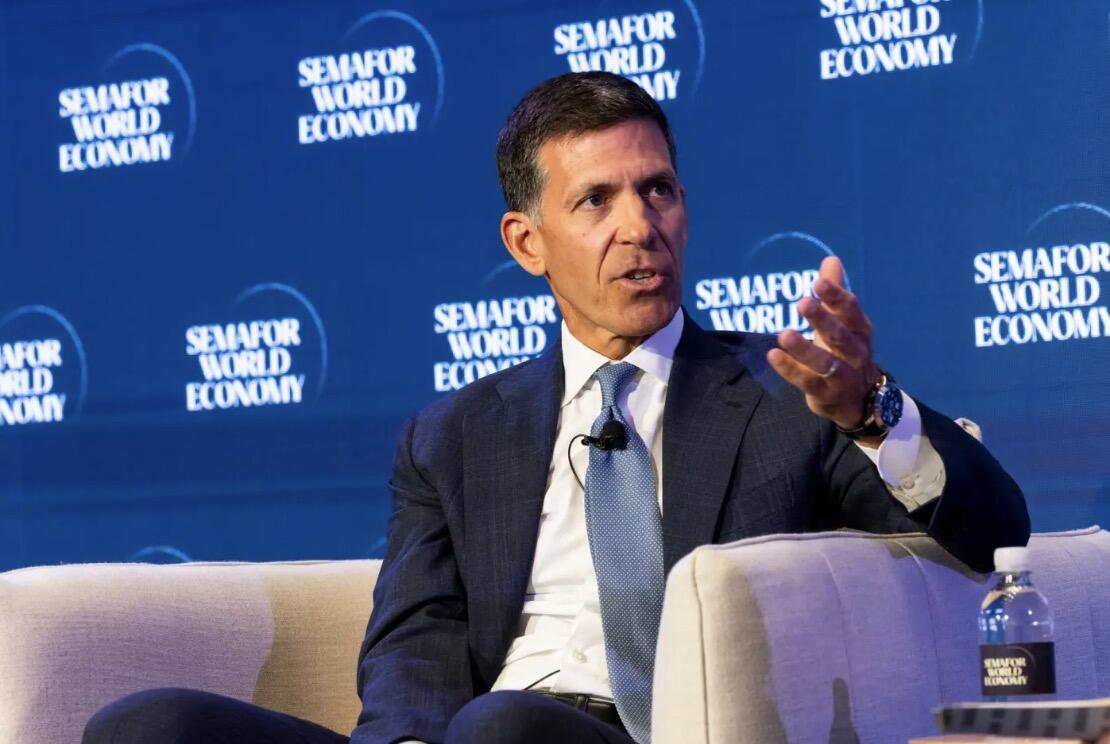
Speaking at Semafor’s World Economy event in Washington, D.C., President and COO of Goldman Sachs John Waldron warned that some managers have oversold how easy it is to get money out—especially to retail investors, who’ve helped balloon the market into a $1.7 trillion behemoth just as the space faces growing scrutiny and tighter conditions, according to Semafor.

“Not everybody has marketed their product as clearly as, certainly we would like to see with the clarity that this is really not a liquid product. It’s not semi-liquid. It’s really illiquid,” Waldron said.

Those retail investors, I think, have the perception of more liquidity than is the reality.”

That mismatch matters more now. Private credit has been under pressure lately—from higher rates to jittery investors suddenly remembering they might want their cash back.

Semafor writes that Waldron isn’t predicting imminent trouble unless the broader economy cracks.

“This is an economy that has been predicted to be in trouble for a long time and shows extraordinary resilience,” he said.

“I still see that resilience.” He added, “This economy is much stronger than the narrative suggests.”

He said recent earnings don’t show “any real evidence” of serious weakness, and for now, “confidence is still pretty good,” though prolonged geopolitical tensions—like the ongoing conflict involving Iran—could start to erode that. If oil spikes and key routes like the Strait of Hormuz are disrupted, “you’re going to start to see demand destruction,” he warned.

The bigger watchpoint: liquidity.

Retail investors now make up roughly a fifth of the U.S. private credit market, drawn in by lower minimums—but not necessarily easy exits. Many of these funds cap withdrawals at around 5% per period.

“In situations where there’s a sense that there’s undercurrents of trouble in private credit, you could have more redemption pressure where people want their money back and their gates are going up because that’s the way the system works,” he concluded.

Tyler Durden Thu, 04/16/2026 - 11:25

Trump Signs Pipeline Permits To Boost US–Canada Oil Flow

Trump Signs Pipeline Permits To Boost US–Canada Oil Flow

Authored by Kimberley Hayek via The Epoch Times,

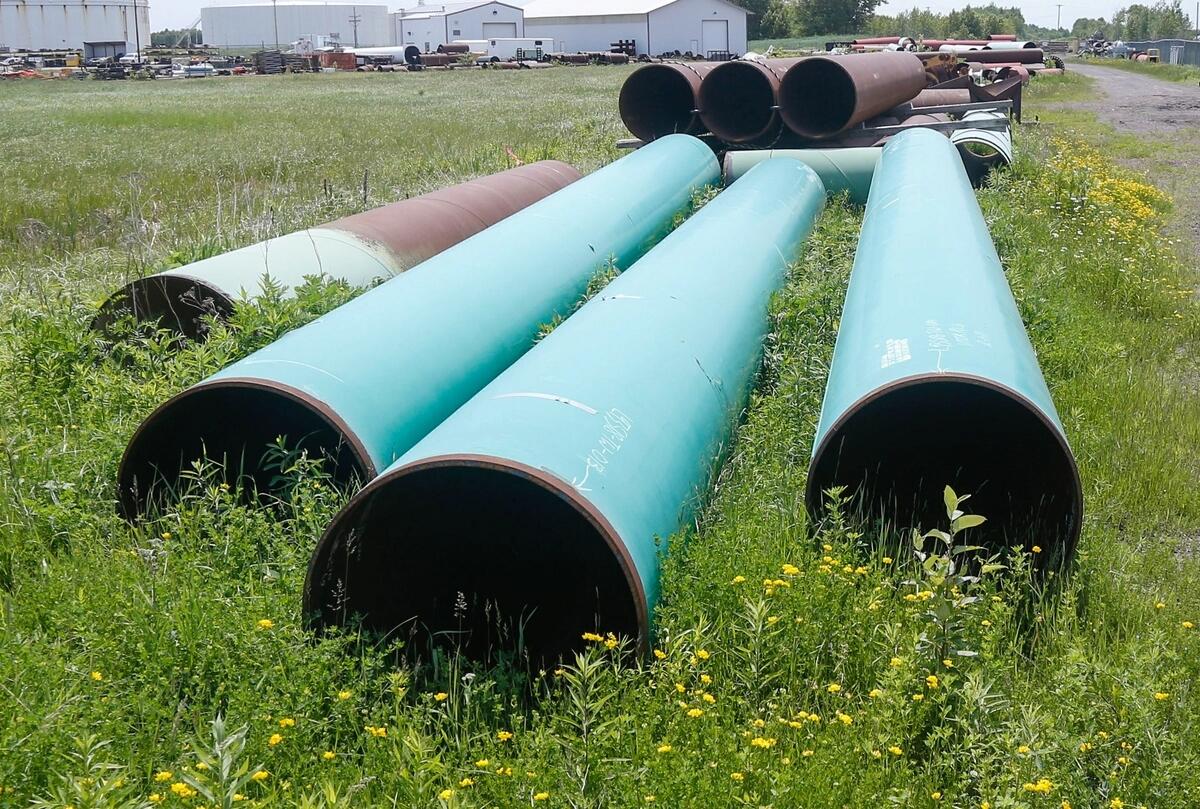
President Donald Trump issued several pipeline permits on April 15, including one for the construction of a new pipeline to facilitate the transportation of crude oil and petroleum products between the United States and Canada, according to documents released by the White House.

The action covers four permits in total. The permit authorizing construction was issued to the Bakken Pipeline Company LP for pipeline facilities in Burke County, North Dakota. Other permits were issued for the maintenance and operation of existing pipelines at border locations in North Dakota and Michigan. The recipients of those operational permits are “Enbridge Energy, Limited Partnership” and “Enbridge Pipelines (Southern Lights) L.L.C.”—both indirect subsidiaries of Canadian pipeline giant Enbridge Inc.

According to the White House documents, the permits cover transport of crude oil and petroleum products of every description—refined and unrefined—including naphtha, liquefied petroleum gas, natural gas liquids, jet fuel, gasoline, kerosene, and diesel. The permits explicitly exclude natural gas subject to the Natural Gas Act.

Wednesday’s permits reflect the administration’s sweeping effort to expand America’s domestic and cross-border energy infrastructure.

At the CERAWeek energy conference March 2025 in Houston, Energy Secretary Chris Wright had said that Trump’s pledge to lower energy costs by boosting oil and natural gas production would require a corresponding increase in infrastructure investment.

“If ‘Drill, baby, drill’ is to [lower energy costs], we’re going to have to ‘Build, baby, build,’” Wright told reporters.

The Enbridge permits issued Wednesday supersede authorizations dating to 1991, 1994, and 2008, effectively reissuing and consolidating federal approval under the current administration. The cross-border pipeline landscape has grown increasingly complex in recent years—there are more than 2.6 million miles of oil and gas pipelines crisscrossing the United States, with 71 networks spanning the border with Canada, meaning they are primarily regulated under federal law and by treaties between the two countries.

Enbridge has long been a central player in that network, though not without controversy: The company confirmed in late 2024 that it had cleaned up roughly 60 percent of a nearly 70,000-gallon oil spill from one of its lines in Wisconsin.

The U.S.–Canada energy relationship has also been shadowed by tariff tensions. Trump threatened to impose 25 percent tariffs on Canada over border security concerns, along with a reduced levy of 10 percent on Canadian oil and gas. Wednesday’s permits signal continued bilateral energy cooperation even as trade negotiations between the two countries remain active.

The permits arrive against a backdrop of years of pipeline battles between Washington and Ottawa.

Trump has pushed for the revival of the Keystone XL pipeline, which would transport crude oil from Canada to the United States.

“The company building the Keystone XL Pipeline that was viciously jettisoned by the incompetent Biden Administration should come back to America, and get it built—NOW!” Trump wrote on Truth Social in February 2025.

The Keystone XL project was ultimately suspended on Jan. 20, 2021, when then-President Joe Biden revoked its presidential permit, citing the need to “advance environmental justice.” Biden argued the project would “not serve the U.S. national interest” based on an analysis conducted under the Obama administration citing climate risk.

Canada has been eager to expand its access to U.S. markets. Calgary-based Enbridge Inc. has been in talks with customers about expanding its Mainline pipeline network—the largest pipeline system in North America—to handle growing volumes of Canadian oil output. Canada currently sends 97 percent of its oil exports and 100 percent of its natural gas exports to the United States, leaving it with limited leverage in any trade dispute.

Wednesday’s permits are the latest step in Trump’s strategy to make North America self-sufficient in energy and a dominant exporter.

Tyler Durden Thu, 04/16/2026 - 11:05

Trump Signs Pipeline Permits To Boost US–Canada Oil Flow

Trump Signs Pipeline Permits To Boost US–Canada Oil Flow

Authored by Kimberley Hayek via The Epoch Times,

President Donald Trump issued several pipeline permits on April 15, including one for the construction of a new pipeline to facilitate the transportation of crude oil and petroleum products between the United States and Canada, according to documents released by the White House.

The action covers four permits in total. The permit authorizing construction was issued to the Bakken Pipeline Company LP for pipeline facilities in Burke County, North Dakota. Other permits were issued for the maintenance and operation of existing pipelines at border locations in North Dakota and Michigan. The recipients of those operational permits are “Enbridge Energy, Limited Partnership” and “Enbridge Pipelines (Southern Lights) L.L.C.”—both indirect subsidiaries of Canadian pipeline giant Enbridge Inc.

According to the White House documents, the permits cover transport of crude oil and petroleum products of every description—refined and unrefined—including naphtha, liquefied petroleum gas, natural gas liquids, jet fuel, gasoline, kerosene, and diesel. The permits explicitly exclude natural gas subject to the Natural Gas Act.

Wednesday’s permits reflect the administration’s sweeping effort to expand America’s domestic and cross-border energy infrastructure.

At the CERAWeek energy conference March 2025 in Houston, Energy Secretary Chris Wright had said that Trump’s pledge to lower energy costs by boosting oil and natural gas production would require a corresponding increase in infrastructure investment.

“If ‘Drill, baby, drill’ is to [lower energy costs], we’re going to have to ‘Build, baby, build,’” Wright told reporters.

The Enbridge permits issued Wednesday supersede authorizations dating to 1991, 1994, and 2008, effectively reissuing and consolidating federal approval under the current administration. The cross-border pipeline landscape has grown increasingly complex in recent years—there are more than 2.6 million miles of oil and gas pipelines crisscrossing the United States, with 71 networks spanning the border with Canada, meaning they are primarily regulated under federal law and by treaties between the two countries.

Enbridge has long been a central player in that network, though not without controversy: The company confirmed in late 2024 that it had cleaned up roughly 60 percent of a nearly 70,000-gallon oil spill from one of its lines in Wisconsin.

The U.S.–Canada energy relationship has also been shadowed by tariff tensions. Trump threatened to impose 25 percent tariffs on Canada over border security concerns, along with a reduced levy of 10 percent on Canadian oil and gas. Wednesday’s permits signal continued bilateral energy cooperation even as trade negotiations between the two countries remain active.

The permits arrive against a backdrop of years of pipeline battles between Washington and Ottawa.

Trump has pushed for the revival of the Keystone XL pipeline, which would transport crude oil from Canada to the United States.

“The company building the Keystone XL Pipeline that was viciously jettisoned by the incompetent Biden Administration should come back to America, and get it built—NOW!” Trump wrote on Truth Social in February 2025.

The Keystone XL project was ultimately suspended on Jan. 20, 2021, when then-President Joe Biden revoked its presidential permit, citing the need to “advance environmental justice.” Biden argued the project would “not serve the U.S. national interest” based on an analysis conducted under the Obama administration citing climate risk.

Canada has been eager to expand its access to U.S. markets. Calgary-based Enbridge Inc. has been in talks with customers about expanding its Mainline pipeline network—the largest pipeline system in North America—to handle growing volumes of Canadian oil output. Canada currently sends 97 percent of its oil exports and 100 percent of its natural gas exports to the United States, leaving it with limited leverage in any trade dispute.

Wednesday’s permits are the latest step in Trump’s strategy to make North America self-sufficient in energy and a dominant exporter.

Tyler Durden Thu, 04/16/2026 - 11:05

Can You Price In No Longer Pricing Things In?

Can You Price In No Longer Pricing Things In?

By Michael Every of Rabobank

At this point it isn’t a random walk but a determined march: markets have decided the Iran war and the Hormuz blockades are over, and everything is going to be better than normal imminently: the Nasdaq and S&P are at all-time highs and even worries over private credit are receding. In the real world, there are signs that back that stance and ones that say otherwise.

Iran warned it could sink US ships in Hormuz if they police the waterway and the Houthis could blockade the Red Sea. The FT reports Iran used a Chinese spy satellite to target US bases. Note the subtext to Trump’s subsequent Truth Social post: “China is very happy that I am permanently opening the Strait of Hormuz. I am doing it for them, also - And the World. This situation will never happen again. They have agreed not to send weapons to Iran. President Xi will give me a big, fat, hug when I get there in a few weeks. We are working together smartly, and very well! Doesn't that beat fighting??? BUT REMEMBER, we are very good at fighting, if we have to - far better than anyone else!!!"

Yet the US and Iran are reportedly weighing a two-week truce extension and inching towards a framework deal, as the latter feels the economic pressure; crucially, China is seen pressing Iran to open Hormuz; and Tehran has offered a proposal allowing ships to exit the Oman side of the Strait free of attack, if a wider deal with the US can be struck. That looks like the face-saving way for the regime to re-open the Strait… if there can be a “grand bargain” on the nuclear issue, missiles, and its regional proxies. Matching that trend, Israel is close to a one-week ceasefire with Hezbollah in Lebanon, even if there is no clear way to rid the country of the terror group despite the Israeli and Lebanese authorities now seeming united in wanting to do so.

Potentially, we could still see this war end in line with what has been our base case for a while now: a broad --if naturally disputed-- US win vs Iran by the second to third week of April, giving it de facto control of a new Middle East (or, less likely, a belated TACO). Yet the downside is longer blockades, with tail risks of any new escalation deepening and/or widening the war. The latter scenario might only be priced into the physical market, not the oil futures markets.

Meanwhile, the US Beige Book noted “The conflict in the Middle East was cited as a major source of uncertainty that complicated decision-making around hiring, pricing, and capital investment, with many firms adopting a wait-and-see posture… Many Districts continued to report signs of consumer financial strain, increased price sensitivity, and rising demand at food banks and other social service organizations, while spending among higher-income consumers was resilient… several Districts reported that rising crop prices helped offset steep price increases of fertilizer and fuel.”

Australia needs more energy imports as a fire rages at one of its two oil refineries, the latest in a series of such accidents at the few western facilities still operating. An accident, sabotage, or just the result of over-working the facility in a crisis? Regardless, the founder of Ivanhoe Mines states that: “The Australian mining industry is now on the verge of collapse due to diesel shortages… the fuel supply chain that powers every drill, truck, and haul is about to snap.” Who drove that decline in refineries, one may ask? Markets and their uncanny ability to ‘price things in.’

China’s Canton Fair is clouded by higher costs hitting its exporters due to the Iran war.

Brussels warned EU countries not to hoard fuel within their borders weeks after telling everyone there was no risk of an energy crisis. Reportedly, the European Commission also wants to see fossil fuels taxed higher than electricity to drive the EU towards renewable energy in the long term – as member states are doing the opposite in the face of this crisis so far; and, from a broader geopolitical perspective, as we see the warning that ‘Fuel scarcity is European armies’ ‘Achilles’ heel.’ No military, and no mine, currently runs on electricity.

But let’s look to the ‘all-time highs’ post-war period and see if that’s really priced in or not.

Lots of scores will be settled in lots of places. As just one example of many, Trump has warned that the US-UK trade deal “can always be changed” with bilateral relations in a “sad state” after Britain was “not there when we needed them” on Iran.

There will be major structural shifts. For example, the IMF warns the war threatens to turbocharge a looming government debt crisis. The longer the blockade goes on, the more this is true. Defence spending is going to soar even higher even faster in even more places.

Specifically, the US is pushing for a staggering $1.5 trillion defense budget, up nearly 50%, and it’s using Iran and the ‘China threat’ to convince Congress to spend (read: borrow) much more. Very significantly, the Pentagon has also approached US automakers and manufacturers to ask if they can boost weapons production, e.g., GM or Ford shifting capacity from civilian to military. I’ve long argued neo-mercantilism and the US WW2 heuristic underlined ‘resilience’ requires a broad manufacturing base that can be adapted for military purposes in a crisis; that requires commodities and energy; and, in the face of others’ neo-mercantilism, it also means tariffs, subsidies, price controls, and a stronger state hand.

Indeed, alongside the farcical disconnect between the oil screen price --where investigations are underway into potential insider trading before Trump policy pivots-- and the physical price of a barrel, that Pentagon request is a clear ‘Reverse Perestroika’: a shift from markets and consumption to state-led military-industrial production, which requires other key components to succeed, including the Fed.

Notably, Trump is refusing to allow to halt the criminal probe of Fed Chair Powell --the DOJ made a surprise visit to the Fed’s under-renovation headquarters, where they were turned away: a blockade?-- while threatening to fire him if he won’t step down from the FOMC when his term ends on May 15. Powell says he won’t step down from the Committee until Warsh is appointed as Chair by the Senate; the Senate won’t appoint Warsh until the criminal prosecution of Powell is dropped. Does somebody need both sides to go to Pakistan to sort this out? But seriously, explain the logic of the Fed remaining untouched while epic shifts in geopolitics and political economy are underway; and do it without saying, “because markets.”

On which note, New York Mayor Mamdani also announced ‘Happy Tax Day’ aimed at raising $500m by taxing billionaires’ pied-a-terres in Manhattan: how much are their equivalents in Miami, one wonders?

Pulling this all together, it’s not just that the market has priced in only one possible geopolitical scenario ahead: it’s not pricing that geopolitics suggests a future when things aren’t priced in as the norm. At which point, what are markets for? Try answering that without answering what GDP is for.

I conclude by noting that a social media meme going round yesterday had two dinosaurs looking at a huge meteor approaching to impact the earth. The first says, “That doesn’t look good for us.” The second replies, “Don’t worry, it’s priced in.”

Tyler Durden Thu, 04/16/2026 - 10:25

Former Virginia Lt. Gov. Justin Fairfax And Wife Found Dead In Apparent Murder-Suicide

Former Virginia Lt. Gov. Justin Fairfax And Wife Found Dead In Apparent Murder-Suicide

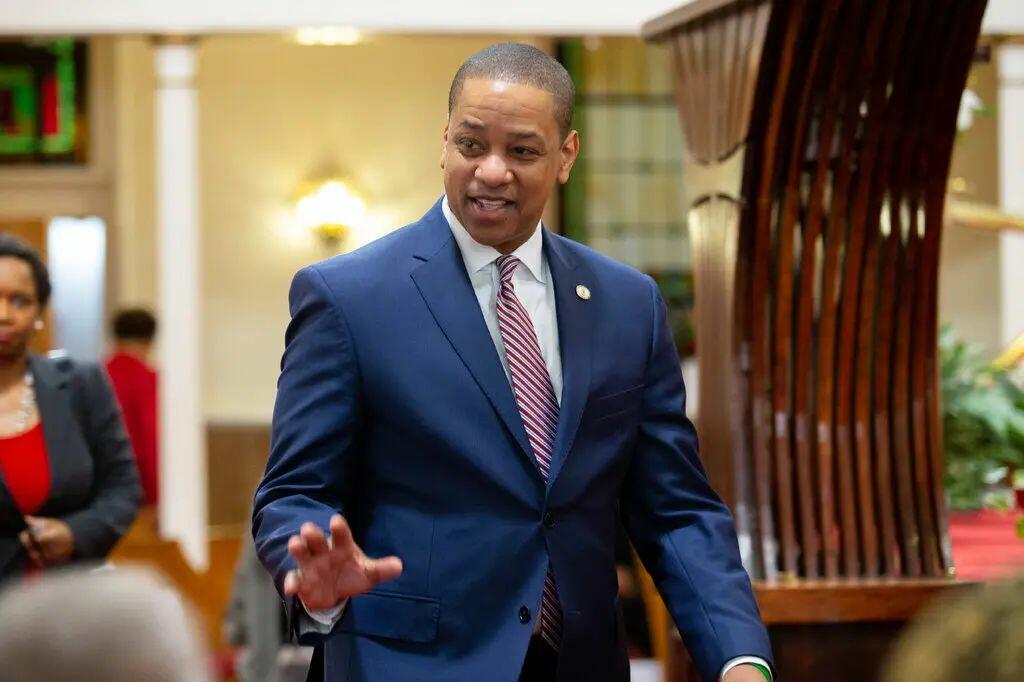
Justin Fairfax, the former lieutenant governor of Virginia, and his wife, Cerina Fairfax, a dentist, were found dead in an apparent murder-suicide at their home shortly after midnight on Thursday, according to Fairfax County police.

Justin Fairfax in 2019. He served as Virginia’s lieutenant governor from 2018 to 2022.Credit...Parker Michels-Boyce for The New York Times

Fairfax, 47, shot and killed his wife before turning the gun on himself, Police Chief Kevin Davis said. The couple’s teenage children were home at the time of the shootings.

Davis described the deaths as the result of an “ongoing domestic dispute surrounding a complicated or messy divorce.” Court records show that the Fairfaxes had been engaged in divorce proceedings this year.

Fairfax, a Democrat, served as Virginia’s lieutenant governor from 2018 to 2022 after winning election in 2017 alongside Gov. Ralph Northam. He largely remained out of the spotlight until 2019, when a series of scandals engulfed the state’s Democratic leadership.

The crisis began when old medical school yearbook photos surfaced appearing to show Governor Northam in blackface. As calls mounted for Northam’s resignation, two women came forward to accuse Mr. Fairfax, who would have been next in line for the governorship, of sexual assault. One alleged the assault occurred in 2000 at Duke University; the other said it took place in 2004 at the Democratic National Convention, the NY Times reports.

Fairfax denied both allegations - but the accusations effectively stalled momentum to force Northam from office. The situation grew more chaotic when the state attorney general, the third-ranking Democrat in Virginia’s executive branch, admitted he too had worn blackface as a college student. All three men ultimately served out their full terms.

Insisting he had done nothing wrong, Fairfax launched a bid for governor in the 2021 Democratic primary. In one televised debate, he accused his rival, former Gov. Terry McAuliffe, of “treating me like Emmett Till” for calling on him to resign over the sexual assault allegations.

With minimal institutional support and limited fundraising, Fairfax finished fourth in the primary, receiving just 3.6 percent of the vote. Mr. McAuliffe won the nomination but lost the general election to Republican Glenn Youngkin.

Fairfax had kept a low public profile since leaving office. Thursday’s tragedy marks a grim end to a once-promising political career that was repeatedly overshadowed by scandal and personal turmoil.

Tyler Durden Thu, 04/16/2026 - 10:05

DOJ Petitions Court To Toss Convictions Of Unpardoned Jan. 6 Defendants

DOJ Petitions Court To Toss Convictions Of Unpardoned Jan. 6 Defendants

Authored by Janice Hisle via The Epoch Times,

The Justice Department is petitioning an appeals court to throw out the convictions of unpardoned defendants who were charged in connection with the U.S. Capitol breach on Jan. 6, 2021.

“The United States has determined ... that dismissal of this criminal case is in the interests of justice,” read a motion filed April 14 in the case of Elmer Stewart Rhodes III, Kelly Meggs, Kenneth Harrelson, and Jessica Watkins.

All four defendants belonged to the Oath Keepers, a group that says its members are mostly former military, police, and medics who are dedicated to upholding Constitutional rights. Rhodes, the group’s founder, had been one of the most high-profile Jan. 6 defendants; he was sentenced to 18 years in prison for seditious conspiracy and other charges.

In their motion filed in the U.S. District Court for the District of Columbia, federal prosecutors said they would file separate motions-to-vacate in “similar” Jan. 6 cases.

Those cases involve four other Oath Keepers—Roberto Minuta, Edward Vallejo, David Moerschel, and Joseph Hackett—along with Proud Boys members Ethan Nordean, Joseph Biggs, Zachary Rehl, and Dominic Pezzola.

The Proud Boys group has said it is open to men who are “gay or straight,” and of all races and religions who support Western values that created the modern world.

After being sworn in as the 47th president in 2025, President Donald Trump granted full pardons to about 1,500 people who faced Jan. 6 charges.

However, he stopped short of pardoning 14 defendants who were Oath Keepers and Proud Boys.

He instead commuted their sentences, leaving their convictions still standing.

Cases involving 12 of those defendants are part of the motion that U.S. Attorney Jeanine Pirro signed on April 14.

The remaining two defendants who had not received pardons include Oath Keeper associate Thomas Caldwell, who received a delayed presidential pardon in March 2025. The other is former Proud Boy Jeremy Bertino, who admitted guilt and served as a prosecution witness against other Proud Boys.

If the Washington appeals court vacates the convictions as requested, prosecutors then would move to dismiss the cases “with prejudice,” Pirro wrote.

That specification would permanently bar prosecutors from refiling the charges.

Since 1977, the U.S. Supreme Court has “recognized that appellate courts have authority” to take the action Pirro has requested, the filing said.

Some members of the Oath Keepers and Proud Boys did receive pardons, including former Proud Boys national chairman Henry “Enrique” Tarrio. He had been convicted of seditious conspiracy and other charges that brought a 22-year sentence—the longest meted out to any Jan. 6 defendant.

Last year, Tarrio, Biggs, Rehl, Nordean, and Pezzola filed a $100 million civil lawsuit against the federal government, alleging prosecutors violated their constitutional rights.

Nicholas Smith, an attorney who represents Nordean, expressed gratitude to the Justice Department for its “wise decision” in seeking dismissal of the convictions.

“We don’t want a precedent that says that any physical confrontation between protesters and law enforcement means a crime akin to treason, such as seditious conspiracy,” Smith said.

However, former Metropolitan Police Officer Michael Fanone, who suffered a heart attack after a rioter shocked him with a stun gun on Jan. 6, spoke out against the Justice Department’s motion to throw out the convictions.

“I would remind Americans that these were traitors to this country,” Fanone said. “They planned, incited, and carried out an insurrection.”

In a post on X, John Strand, a Jan. 6 defendant and conservative activist, said the government’s move constituted “exoneration” for defendants who were “entrapped and crushed by an evil, weaponized government.”

Tyler Durden Thu, 04/16/2026 - 09:45

US Industrial Production Unexpectedly Drops In March (After Huge Upward Revision For Feb)

US Industrial Production Unexpectedly Drops In March (After Huge Upward Revision For Feb)

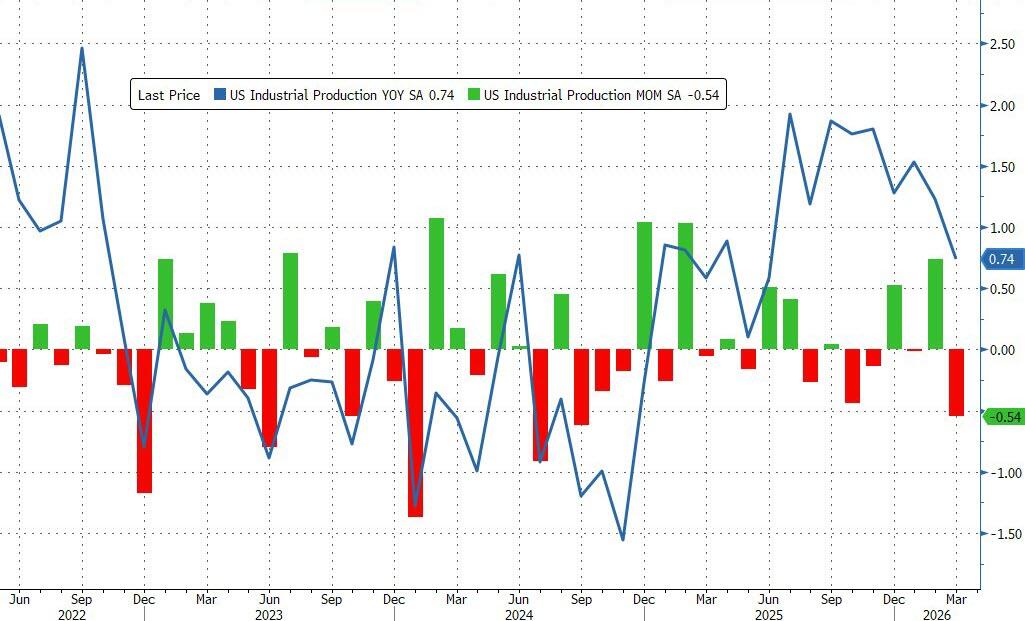
At first glance the 0.5% MoM decline in US Industrial production (considerably worse than than the 0.1% MoM rise expected - and dragging YoY growth in IP down to +0.74%) is bad news... suggesting immediate impacts from the war are being felt and sparking headlines decrying President Trump's actions.

Source: Bloomberg

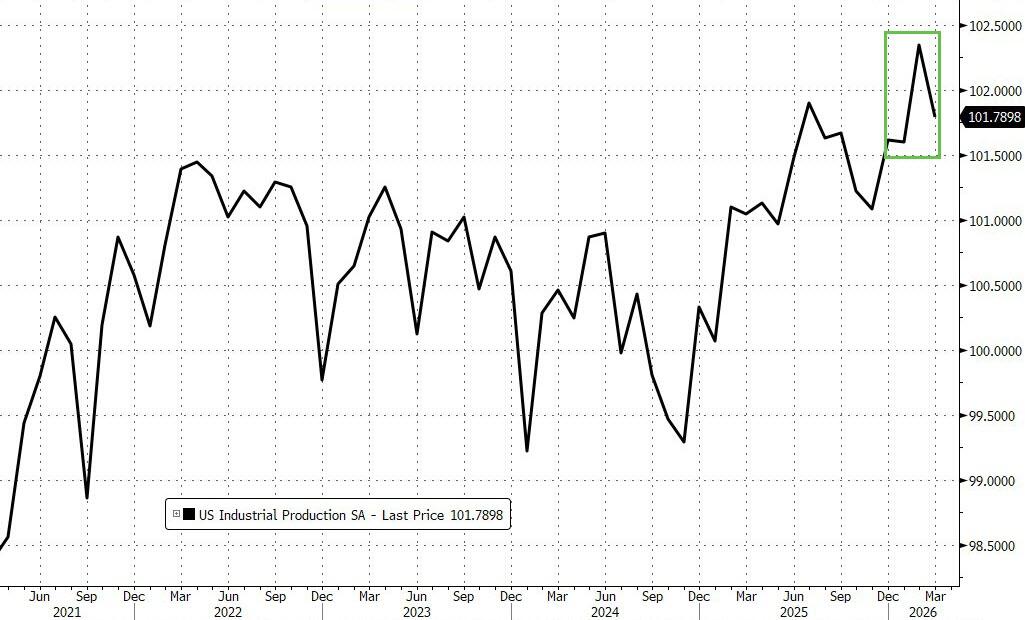
However, while we agree that the decline is notable, the fact that February's data was revised drastically higher, from +0.2% to +0.7% MoM, means that over the two months, industrial production overall is actually higher (and up 0.2% since the end of the war)...

Source: Bloomberg

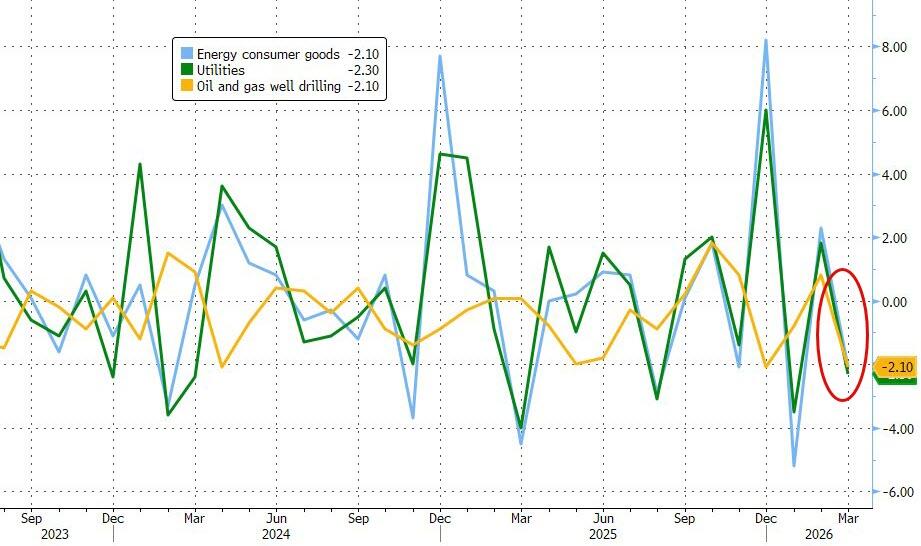
Energy was behind the slowdown:

  • March oil and gas drilling posted a decline of 2.4% m/m after rising 0.6% in Feb., Federal Reserve data show.

  • March consumer energy products was decline of 2.1% m/m after rising 2.3% in Feb.

  • March commercial energy products declined 0.3% m/m after increasing 0.8% in Feb.

.

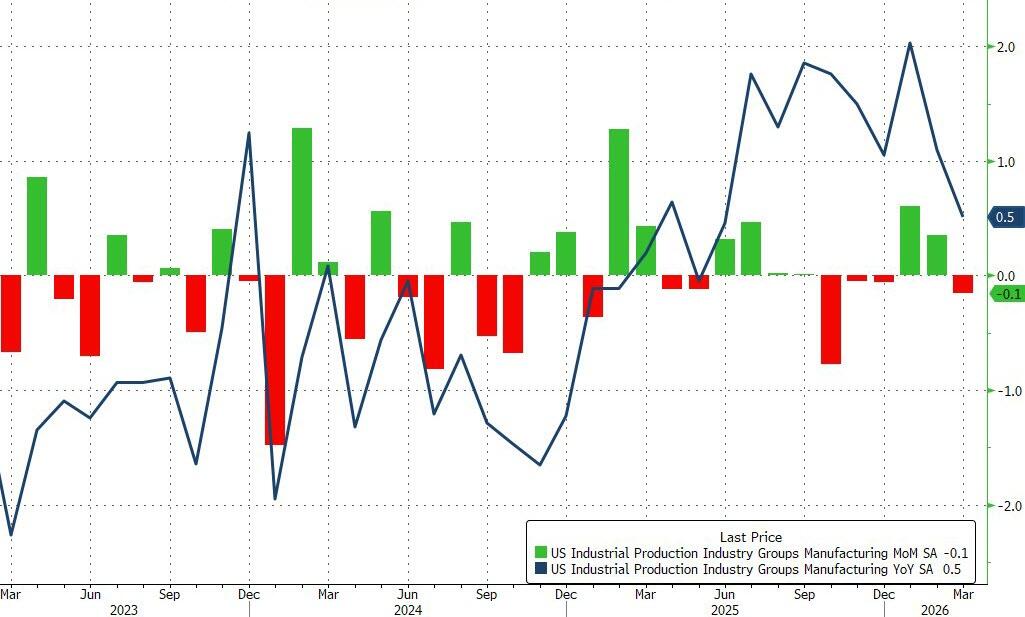
A similar picture evolves for Manufacturing production which fell 0.1% MoM in March (worse than the 0.1% MoM rise expected) after February's 0.2% MoM rise was revised up 2x to a 0.4% MoM rise. Nevertheless, Manufacturing production YoY slowed to just 0.5%...

Source: Bloomberg

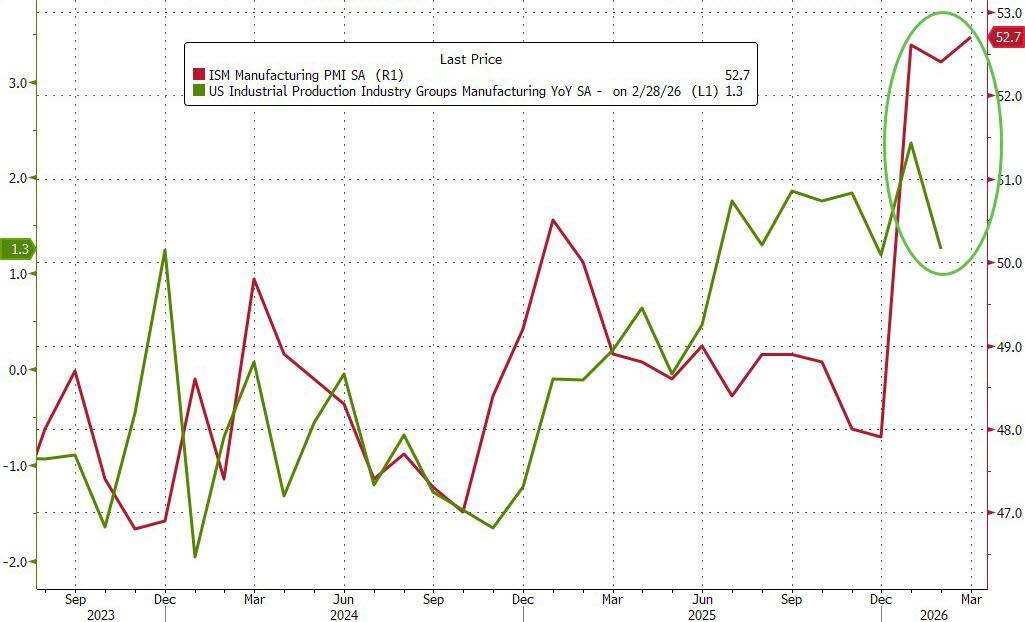
Bottom Line: it's not great news that industrial production is slowing... but it's not as dire as it looks at first glance (and remember Manufacturing PMIs were strong)...

...and energy production is unpredictable at best in the current environment.

Tyler Durden Thu, 04/16/2026 - 09:35

War Economy Returns: From Trucks To Tanks, Pentagon Looks To Automakers To Rebuild America's Arsenal

War Economy Returns: From Trucks To Tanks, Pentagon Looks To Automakers To Rebuild America's Arsenal

With two active conflict areas in Eurasia - the Russia-Ukraine conflict in Eastern Europe and the U.S.-Iran theater in the Gulf - the world is moving deeper into a war cycle. The latest indicator is not only that militaries around the world are beginning to stockpile one-way attack drones, but also the early-stage push to convert underused civilian industrial capacity, including struggling auto production lines, into wartime manufacturing hubs.

The Wall Street Journal is out with a new report that describes just that, noting that the Trump administration is exploring whether U.S. manufacturers, including GM, Ford, GE Aerospace, and Oshkosh, can convert civilian industrial capacity into weapons production as conflicts across Eurasia drag on and deplete critical weapons stockpiles.

The effort to boost the war economy is part of what Defense Secretary Pete Hegseth has described as putting the defense industrial base on a "wartime footing."

A Department of War official said the agency "is committed to rapidly expanding the defense industrial base by leveraging all available commercial solutions and technologies to ensure that our warfighters maintain a decisive advantage."

Senior defense officials told the outlet that Mary Barra of General Motors and Jim Farley of Ford Motor have been briefed on converting auto production lines into weapons manufacturing facilities. The report did not provide details on what types of weapons could be produced in the factories or on the downtime required to convert those lines.

Those officials said GE Aerospace and vehicle and machinery maker Oshkosh were among other manufacturers briefed.

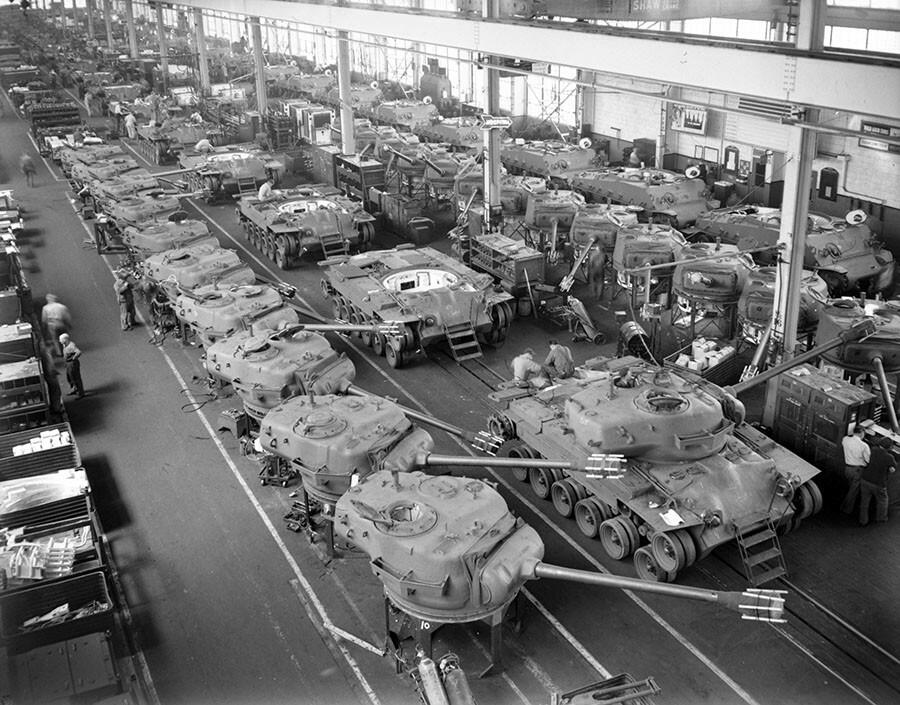
The historical precedent is that America converted its automotive base during World War II to produce record numbers of main battle tanks, bombers, and fighter planes to win the war.

Let's not forget that GM and Ford both repurposed production lines during the Covid pandemic to produce ventilators, so it's not far-fetched that these automakers could one day be rolling tanks down the production lines.

One major hurdle is the far-left unions, which could force labor actions such as strikes, as the broader left-wing ecosystem has transformed into a pressure campaign against anything related to Trump, whether foreign or domestic policy.

Evidence of converting underused civilian industrial capacity has already been seen with the German automaker Volkswagen, which will soon transform its Lower Saxony factory from producing T-Roc Cabriolets to manufacturing parts for the Iron Dome missile interceptor system.

In mid-February, we highlighted a conversation between Anduril Industries founder Palmer Luckey and Joe Rogan about how the U.S. won World War II. Luckey noted:

"How did the United States win World War II … Manufacturing. Some of it was new factories, but most of it was taking over old factories."

That's why Chinese autos will never flood the U.S.: it would destroy the auto industrial base that can easily be converted to wartime production. However, the current left-wing regime in Europe has already chosen to hollow out its industrial core by flooding the continent with BYD cars.

This is wartime stuff.

Tyler Durden Thu, 04/16/2026 - 09:35

War Economy Returns: From Trucks To Tanks, Pentagon Looks To Automakers To Rebuild America's Arsenal

War Economy Returns: From Trucks To Tanks, Pentagon Looks To Automakers To Rebuild America's Arsenal

With two active conflict areas in Eurasia - the Russia-Ukraine conflict in Eastern Europe and the U.S.-Iran theater in the Gulf - the world is moving deeper into a war cycle. The latest indicator is not only that militaries around the world are beginning to stockpile one-way attack drones, but also the early-stage push to convert underused civilian industrial capacity, including struggling auto production lines, into wartime manufacturing hubs.

The Wall Street Journal is out with a new report that describes just that, noting that the Trump administration is exploring whether U.S. manufacturers, including GM, Ford, GE Aerospace, and Oshkosh, can convert civilian industrial capacity into weapons production as conflicts across Eurasia drag on and deplete critical weapons stockpiles.

The effort to boost the war economy is part of what Defense Secretary Pete Hegseth has described as putting the defense industrial base on a "wartime footing."

A Department of War official said the agency "is committed to rapidly expanding the defense industrial base by leveraging all available commercial solutions and technologies to ensure that our warfighters maintain a decisive advantage."

Senior defense officials told the outlet that Mary Barra of General Motors and Jim Farley of Ford Motor have been briefed on converting auto production lines into weapons manufacturing facilities. The report did not provide details on what types of weapons could be produced in the factories or on the downtime required to convert those lines.

Those officials said GE Aerospace and vehicle and machinery maker Oshkosh were among other manufacturers briefed.

The historical precedent is that America converted its automotive base during World War II to produce record numbers of main battle tanks, bombers, and fighter planes to win the war.

Let's not forget that GM and Ford both repurposed production lines during the Covid pandemic to produce ventilators, so it's not far-fetched that these automakers could one day be rolling tanks down the production lines.

One major hurdle is the far-left unions, which could force labor actions such as strikes, as the broader left-wing ecosystem has transformed into a pressure campaign against anything related to Trump, whether foreign or domestic policy.

Evidence of converting underused civilian industrial capacity has already been seen with the German automaker Volkswagen, which will soon transform its Lower Saxony factory from producing T-Roc Cabriolets to manufacturing parts for the Iron Dome missile interceptor system.

In mid-February, we highlighted a conversation between Anduril Industries founder Palmer Luckey and Joe Rogan about how the U.S. won World War II. Luckey noted:

"How did the United States win World War II … Manufacturing. Some of it was new factories, but most of it was taking over old factories."

That's why Chinese autos will never flood the U.S.: it would destroy the auto industrial base that can easily be converted to wartime production. However, the current left-wing regime in Europe has already chosen to hollow out its industrial core by flooding the continent with BYD cars.

This is wartime stuff.

Tyler Durden Thu, 04/16/2026 - 09:35

Pages